Living with Fanconi anemia, or caring for someone with FA, brings ongoing uncertainty, complex medical experiences and emotional strain. These experiences affect more than physical health. They can also shape mental health, relationships, daily routines and a person’s sense of safety and connection.
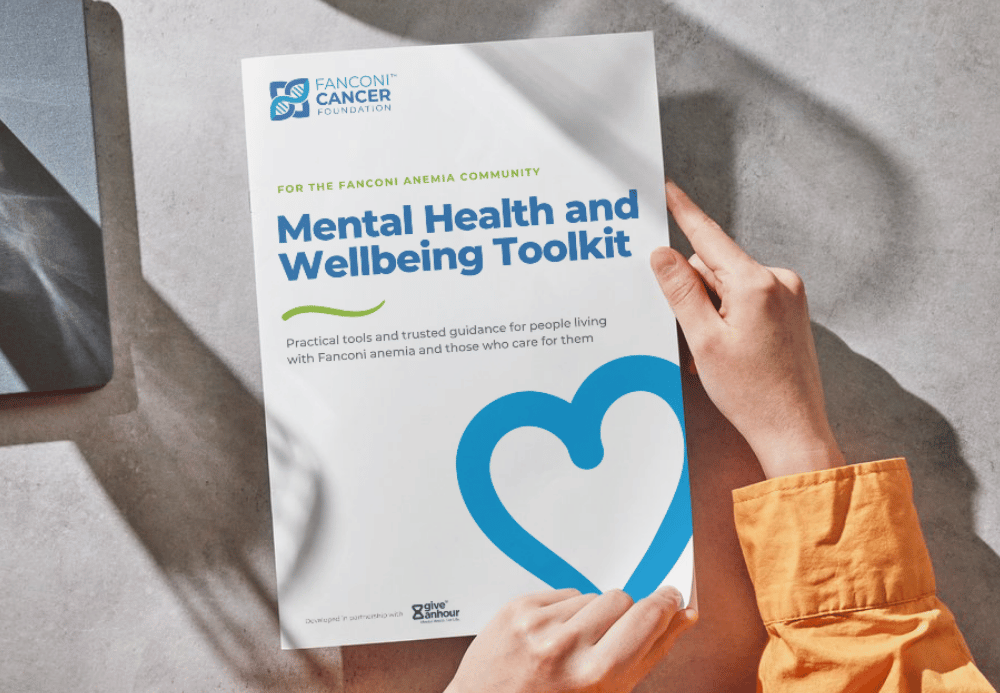
The Fanconi Cancer Foundation is pleased to introduce the Mental Health and Wellbeing Toolkit, a new resource offering practical tools and trusted guidance for people living with FA and those who care for them.
Why this resource matters
Research is helping us better understand the mental health experiences of adults with FA. Nearly half of adults who participated in one recent study screened positive for symptoms of post-traumatic stress. Many also reported symptoms of anxiety and depression, along with fatigue, sleep disturbance, chronic pain and unmet mental health needs.
Caregivers and care partners may also carry significant emotional strain as they navigate complex care, repeated medical stress and uncertainty about the future.
These experiences can feel isolating, but no one should have to navigate them alone. Mental health support is an important part of caring for the whole person and the people who support them.
Practical tools for real-life needs
Developed in partnership with Give an Hour, the toolkit brings together research-informed guidance, community perspectives and exercises that can be used during everyday stress as well as more difficult moments.
The toolkit includes resources to help individuals and caregivers:
- Recognize signs of emotional distress
- Practice self-compassion and manageable forms of self-care
- Navigate isolation, grief and uncertainty
- Identify and strengthen support systems
- Talk with children about mental health
- Prepare for emotional or medical crises
- Find a mental health professional who understands trauma and medical complexity
- Explain FA-related experiences and care needs to a provider
The toolkit also includes worksheets that can be completed, printed or shared, including an emotions tracker, support system map, crisis response plan and mental health storyboards for individuals with FA and caregivers.
For moments when everything feels overwhelming, the toolkit begins with a simple PACE exercise: pause, act on one simple step, connect, engage in self-care and engage in extra support.
Use the toolkit in the way that works for you
You don’t need to read the toolkit from beginning to end. You might begin with one exercise, return to a section during a challenging time or share a provider resource with a counselor or member of your care team.
The toolkit is grounded in choice, pacing and safety. Some topics may bring up strong emotions, and it’s OK to pause, skip a section or reach out for support.
FCF advocates Erica Williams and Faith Barbe provided feedback to help ensure the resource reflects the experiences and needs of the FA community. Clinical and research experts also reviewed and contributed information. Finally, we thank partners Give An Hour for providing much of the resources we could adapt to the FA community.
We hope this toolkit helps you feel more prepared, more supported and less alone in whatever you’re carrying.
You can also visit FCF’s mental health webpage to learn about counseling, one-on-one coaching, research and other resources available to the FA community.
This toolkit is an educational and supportive resource. It isn’t a diagnostic tool or a substitute for individualized medical or mental health care. If you’re in the United States and experiencing emotional distress or need immediate support, call or text 988. If you’re outside the U.S., visit FindAHelpline.com.